Saratoga
Saratoga / Chimney & Fireplace
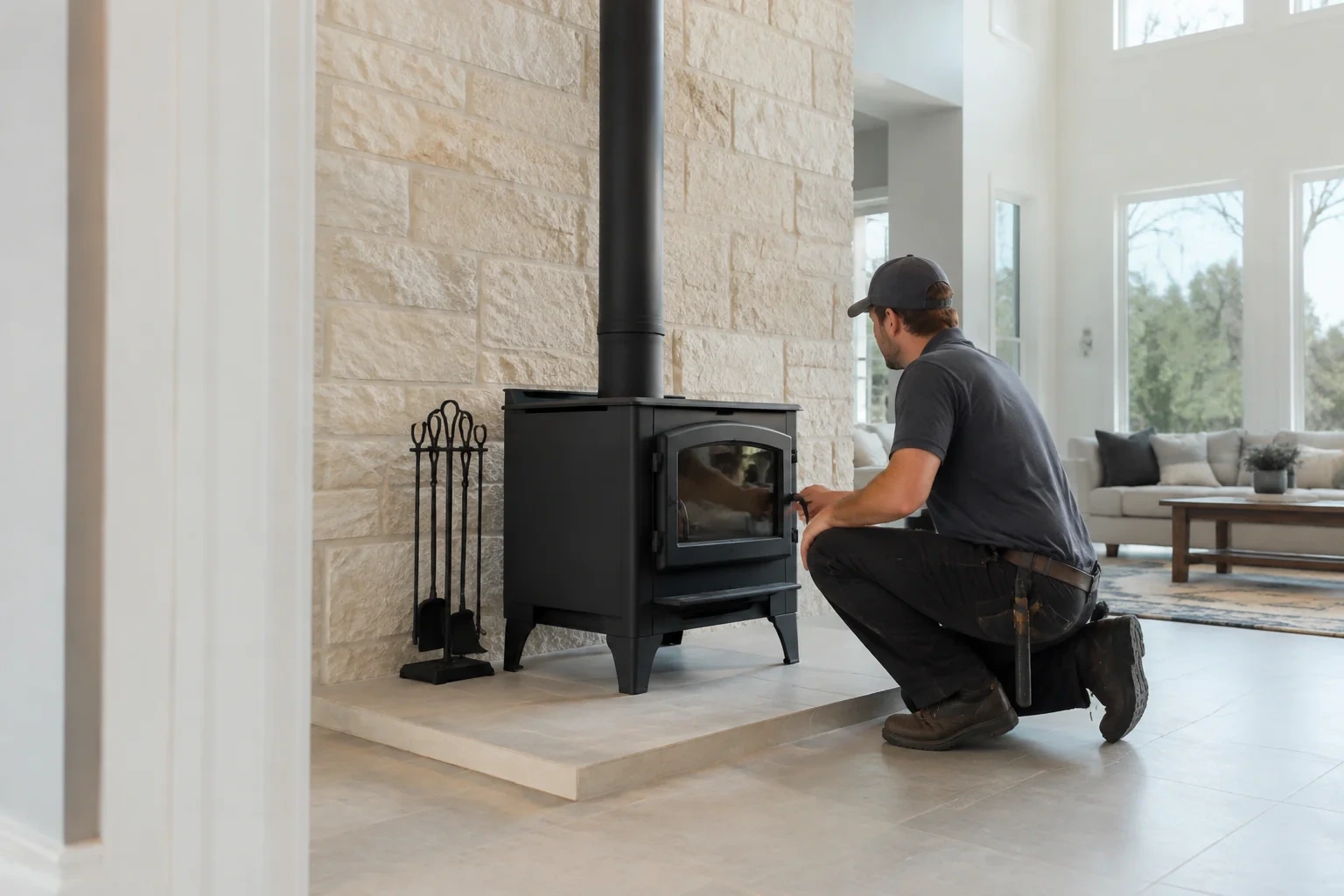
Wood Stove Installation in Saratoga
You are considering a wood stove and need a site, hearth, and venting assessment first.
The short answer
Identify the proposed stove and location, then ask how venting, clearances and floor protection will be assessed for that installation. Request the documented scope and responsibilities for preparation, applicable approvals and completion checks.
The symptom
You are considering a wood stove and need a site, hearth, and venting assessment first.
The proposed method
Identify the proposed stove and location, then ask how venting, clearances and floor protection will be assessed for that installation. Request the documented scope and responsibilities for preparation, applicable approvals and completion checks.
Items to discuss
wood stove, venting components, hearth protection. Clarify which parts or materials would be supplied, which tools would be used, and what documentation is included.
What shapes the quote?
Proposed installation
Identify the stove, location, venting route and floor or wall protection addressed by the proposal.
Responsibilities and checks
Clarify preparation, installation documentation and responsibility for applicable approvals and completion checks.
Completion record
Ask for the completed scope, findings and any unresolved limitations to be recorded at handover.
Ask for a written quote and confirm the complete charge before work begins.
Property context in Saratoga
Santa Clara County sits inside the Bay Area Air Quality Management District, whose Regulation 6 Rule 3 governs wood burning. The District’s own FAQ describes winter months starting 1 November through the end of February, and says Winter Spare the Air Alerts are issued when pollution reaches unhealthy levels — roughly 20 days each winter, when burning is not allowed. It also states that excessive smoke is not allowed beyond a 20-minute start-up period, and describes a Sole Source of Heat exemption for households whose only heat is a registered EPA-certified device. Check the alert status before you light a fire. This District FAQ was last updated in October 2017; confirm the current rule and alert status with the District.
Source for local exposure ↗The Bay Area Air Quality Management District publishes what may be installed when hearth work is done. It states that no wood-burning devices of any kind may be installed in new homes or buildings being constructed in the Bay Area, and describes a chimney or fireplace remodelling project costing over $15,000 that requires a building permit as limited to a gas-fuelled, electric or EPA-certified device. The District also says wood burning is banned throughout the year when a Spare the Air Alert is called. Discuss the proposed appliance and the permit path with both the City of Saratoga and the District before ordering anything. This is an air-district reference; it does not decide what your property needs.
Source for planning your work ↗Area-wide context is not a finding about your own property.
Useful references
CSIA · homeowner resources ↗General guidance. Confirm the scope for your property.
Before you decide
Good questions.
Clearer next steps.
What does wood stove installation involve?
Identify the proposed stove and location, then ask how venting, clearances and floor protection will be assessed for that installation. Request the documented scope and responsibilities for preparation, applicable approvals and completion checks.
What should the proposal say about parts, materials and equipment?
Discuss wood stove, venting components, hearth protection. Ask the provider to distinguish existing parts to inspect, proposed replacements, and tools, materials or reports included in the service. Request a reason for any replacement and confirm compatibility with your equipment. A list of possible items does not mean that every item must be supplied or replaced.
How is an inspection different from chimney sweeping?
An inspection assesses accessible components and documents findings; sweeping removes deposits within the agreed scope. One does not automatically replace the other. Ask which inspection is proposed, what can be accessed, whether cleaning is included and what written findings you will receive.
What information helps plan a chimney visit?
Describe the fireplace or appliance, its fuel type, recent use and any changes you have noticed. Mention previous repairs, water entry or a planned appliance change. Gather available service records and explain access restrictions. These details help define the visit without assuming what the chimney needs.
Can a chimney cap solve a water-entry problem?
A cap is one possible part of the assessment. Water may also enter around flashing, masonry joints or the crown. Ask what evidence supports the proposed repair and which area it addresses. A clear scope distinguishes a cap replacement from work elsewhere on the chimney.
What should an inspection report explain?
Ask for the areas examined, access limitations, photographs of relevant findings and the recommended next steps. The report should distinguish observed conditions from areas that were not visible. Use those findings to discuss repair options rather than treating a general service description as a diagnosis of your property.
How should I compare masonry repair proposals?
Compare the exact area and type of work: mortar joints, crown, flashing, liner or other components are different scopes. Ask about preparation, materials, access equipment and cleanup. If a proposal changes after inspection, request the reason and revised scope before agreeing.
Photo gallery
Chimney or fireplace?
Tell us what you need looked at and we will call you back.